Journalists and research grant grubbers set the wrong expectations.
Showing posts with label energy. Show all posts
Showing posts with label energy. Show all posts
Saturday, October 2, 2021

Wednesday, July 28, 2021
Monday, January 2, 2012
A New Type of Automobile For You and For Me
I Fisk an email circulating on the Interntet:
What is this? Will it be the next big thing? Tata Motors of India thinks so. What will the Oil Companies do to stop it?The oil companies? Nothing! Absolutely nothing. Everyone blames the oil companies for suppressing every impractical alternative energy source since perpetual motion. If someone ever does develop an energy source that is cheaper, cleaner and more practical than gas or diesel, they will become very rich. The oil companies cannot suppress it. There's too much money to be had. It. Simply. Won't. Happen.
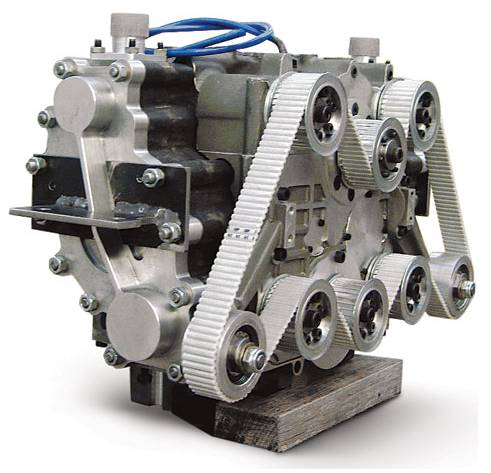
It is an auto engine that runs on air. That's right; air not gas or diesel or electric but just the air around us. Take a look.It's a cute little engine they have there. But it doesn't run on air. It runs on energy stored in compressed air, from a compressor. Powered by fossil fuel, or nuclear, or hydroelectric. I actually don't think compressed air is a very practical energy storage medium. The energy contained in compressed air is similar to winding up a rubber band; there's nothing particularly efficient about it. Plus, there are thermal losses (PV=nRT).

Tata Motors of India has scheduled the Air Car to hit Indian streets by August 2012Air powered? Zero emissions? Hardly! You have to charge it from some other energy source, so there are emissions, unless your power grid is hydroelectric.

The Air Car, developed by ex-Formula One engineer Guy N. For Luxembourg-based MDI, uses compressed air to push its engine's pistons and make the car go.
The Air Car, called the "Mini CAT" could cost around 365,757 rupees in India or $8,177 US.
The Mini CAT which is a simple, light urban car, with a tubular chassis, a body of fiberglass that is glued not welded and powered by compressed air. A Microprocessor is used to control all electrical functions of the car. One tiny radio transmitter sends instructions to the lights, turn signals and every other electrical device on the car. Which are not many.Good thing, too. You won't have much excess energy to waste on electrical accessories.
The temperature of the clean air expelled by the exhaust pipe is between 0-15 degrees below zero, which makes it suitable for use by the internal air conditioning system with no need for gases or loss of power.So if you need air conditioning, you could recover some of the heat lost after compressing the air. Small consolation...
There are no keys, just an access card which can be read by the car from your pocket. According to the designers, it costs less than 50 rupees per 100 KM, that's about a tenth the cost of a car running on gas. It's mileage is about double that of the most advanced electric car, a factor which makes it a perfect choice for city motorists. The car has a top speed of 105 KM per hour or 60 mph and would have a range of around 300 km or 185 miles between refuels. Refilling the car will take place at adapted gas stations with special air compressors. A fill up will only take two to three minutes and costs approximately 100 rupees and the car will be ready to go another 300 kilometers.It might be practical as a small runabout. Its primary advantage is that it is small and light. That's how it saves energy; there is no free lunch here. Gas or battery (or rubber band) powered cars of similar size and weight would be as efficient.
This car can also be filled at home with it's on board compressor. It will take 3-4 hours to refill the tank, but it can be done while you sleep.From the power grid.
Because there is no combustion engine, changing the 1 liter of vegetable oil is only necessary every 50,000 KM or 30,000 miles. Due to its simplicity, there is very little maintenance to be done on this car.That is an advantage, I'll grant you that.
This Air Car almost sounds too good to be true. We'll see in August. 2012Not too good to be true. Just true. Light, tiny, limited in power, range and creature comforts. Speaking of clean, cheap, practical energy sources, I actually believe gasoline and diesel are about as close to perfection as we're ever likely to see, especially with today's computerized engines. There are some possible further improvements on the internal combustion engine (so we don't throw away so much excess heat), but given the number of people using them (literally millions worldwide), the problems are actually remarkably few, and the environmental impact about as low as you could ask. I'll guaran-damn-tee you that if battery technology improved by the order of magnitude necessary to make it practical, and millions of people started driving electric vehicles (or even hybrids) the environmental damage from manufacturing and disposing of all those batteries would be catastrophic. Much worse than the manifold predicted catastrophes that the watermelons pretend to obsess about for fossil fuel. The real tragedy here is, the six-stroke engines are estimated to be 40% more efficient and less polluting than conventional engines -- a practical and significant improvement -- but since they're fossil fuel engines, the watermelons don’t like them. And, unlike the oil companies suppressing technology, government can and does. So you won't see President Obama giving grants to improved internal combustion engine designs, only to electric cars, and solar and wind power. Therefore, improved I-C designs languish, under capitalized, and competing against impractical, artificially propped-up "alternatives". Not that I think government should be subsidizing them either; government shouldn't be picking winners and losers at all. That's what people voting with their hard-earned dollars every day -- in a free market -- are best at.
Sunday, November 6, 2011
Fisker Karma Electric Car Gets Worse Mileage Than an SUV
Government should not be allowed to pick winners and losers. It can't be trusted to be honest about it. This article from Forbes illustrates the problem:
The Fisker Karma electric car, developed mainly with your tax money so that a bunch of rich VC’s wouldn’t have to risk any real money, has rolled out with an nominal EPA MPGe of 52 in all electric mode (we will ignore the gasoline engine for this analysis).
Not bad? Unfortunately, it’s a sham. This figure is calculated using the grossly flawed EPA process that substantially underestimates the amount of fossil fuels required to power the electric car, as I showed in great depth in an earlier Forbes.com article. In short, the EPA methodology leaves out, among other things, the conversion efficiency in generating the electricity from fossil fuels in the first place [by assuming perfect conversion of the potential energy in the fuel to electricity, the EPA is actually breaking the 2nd law of thermodynamics]. (Continue reading...)The free market works on the principle of natural selection. It has no agenda. Politicians, statists and bureaucrats always have an agenda. They cannot abide allowing citizens to make their own choices. There's always the risk that We the People might make choices that the illiberal control freaks might not agree with.
Saturday, October 29, 2011
My Letter to Puget Sound Energy
Dear PSE,
About six months ago, I started receiving "energy report cards" in the mail, telling me that I'm using significantly more energy than my neighbors. Several of my friends and co-workers have received similar notices. I understand the desire and the need to save energy, but I find this comparison to be intrusive and sanctimonious. I'm not in some contest to see who can be more "green". I'm trying to live my life as frugally and responsibly as practical, and I don't need unsolicited advice about how I should do it.
It isn't my concern how much energy my neighbors are using, or vice-versa. If I can afford to pay my electric bill according to our terms of service, then the issue should end there. We happen to have four active adults and one teen-ager living in this household. People are here all day. Some of us work from home, saving on transportation! I believe our energy consumption is legitimate.
I do not appreciate the "big brother" approach being employed here. I believe that you are being pressured by agents of Agenda 21 -- Sustainable Development/ICLEI to do this kind of thing, and I think that it is a diminishing matter of time before we lose yet another civil liberty, ushering in government control over our energy use with so-called "smart meters" and similar technology. Sure, it will start out voluntary, but the historical, natural progress of things is for it to become mandatory. This country used to be based on economic liberty, but increasingly it is based on government mandates and centralized control.
If you think this is conspiracy theory, you need look no further than Community Energy Challenge, shown on your Home Energy Report letterhead. This is conspiracy fact! Community Energy Challenge is supported by Sustainable Connections, ReSources, BALLE, and many others. These are NGOs and non-profits, using my tax dollars and the force of government to promote "sustainable development" all wrapped in a pretty green bow, in direct opposition to our property rights, economic freedom, free markets, capitalism, national sovereignty -- in short, our civil liberties -- and I strongly resent it! The website indicates that it is paid for in part by a grant from the U.S. Department of Energy. Thanks a heap, DOE. Which article of the Constitution gives government the authority to do that?
In a free market, I could simply say, "if you persist in this Orwellian scheme, I'll just take my business elsewhere", but of course we both know I can't do that.
Sincerely,
Karl Uppiano
Which article of the Constitution gives government the authority to do that?
www.antikakistocrat.blogspot.com
Subscribe to:
Posts
(
Atom
)


